
Join us on the road ahead
We’re committed to helping businesses thrive in a low-carbon economy. Let’s partner in a cleaner future without compromise.
Author: Zachary Mondo – Manager, Charging Technology
As a public EV charging operator, Greenlane is in a unique position to serve as the bridge between two critical parts of the electric vehicle ecosystem: the chargers and the vehicles themselves. We have a formalized approach to ensuring compatibility between the two.
This effort reflects our broader commitment to delivering charging experiences that consistently meet or exceed industry expectations for reliability and performance.
Ensuring high uptimes and charging success rates (CSR) is everything in the world of public charging. While passenger EV charging has become more familiar to drivers over the past decade, commercial fast charging is in an active phase of rapid growth and development. Within that growth, reliability remains a major concern.
One of the most persistent issues drivers face is arriving at a station only to find that it’s offline or unresponsive. Drivers will either drive up next to a charger to see that it is out of service, or they’ll park, enter their information and plug in, only to find that the charge isn’t initiating.
According to a recent study by data analytics firm J.D. Power, as of late 2024, “20% of EV drivers who visited public charging stations were unable to charge their vehicles due to a range of issues from station outages and equipment malfunctions to long wait times and payment failures.”
That’s why our testing strategy is designed to reflect the realities of everyday use. We test our systems in real-world scenarios, considering how drivers interact with chargers and the variety of vehicles they bring. Uptime is more than a technical goal. It represents the trust our customers and users place in us. That trust begins with how we validate performance from the ground up.
There are two key areas we focus on:
Firmware validation testing is our first line of defense in ensuring that the firmware running on our chargers performs reliably, safely, and in alignment with industry standards. Every new firmware released from our hardware partners is put through a detailed review process before it’s cleared for deployment.
We validate compliance with the OCPP specification, confirm that the firmware integrates seamlessly with our backend systems, energy management system, and mobile app, and carefully evaluate its impact on charging session behavior. This includes reviewing logs, monitoring the vehicle-charger interface, and testing under a variety of real-world use cases, such as, but not limited to, different authorization methods, stop methods, and replicating real world edge cases our team has experienced in the field.
We place a strong emphasis on collaboration with our hardware OEM partners during this process. When bugs are discovered, we create detailed reports and work directly with the OEMs to resolve them efficiently and prevent them from recurring.
Firmware updates are not released into our production environment until they’ve passed all critical tests, ensuring we don’t introduce avoidable issues that could affect uptime, user experience, charging success rate, data accuracy, or safety. These updates are deployed in phases, allowing our 24/7 call center to monitor newly updated chargers for impacts on our key metrics and user experience, only rolling out the update to the next phase of chargers if the data confirms it is performing to our expectations.
The goal is to release software that improves performance without compromising any of the systems we, and our customers, rely on.
Configuration consistency
One of the benefits of our validation process is the ability to audit charger configurations sitewide to ensure consistency. Even small variations in settings—like language, currency, heartbeats, meter intervals, or connection timeouts—can cause unintended behavior or degrade the driver experience. By catching and correcting these mismatches after firmware updates, technician visits, or OEM configuration changes, we prevent reliability issues before they impact drivers.
SLAC timeout investigation
A recurring issue we investigated during validation was session failures caused by SLAC timeouts, a type of communication error that occurs during the vehicle-charger handshake process. Working closely with both vehicle and charger hardware partners, we were able to document the exact conditions, identify root causes, and implement resolutions. In some cases, this meant resolving firmware bugs, while in others it required updated operator training—demonstrating the value of collaboration across the ecosystem.
Edge case testing
Our testing process also focuses on edge cases that might only appear rarely in the field but can create significant friction for drivers. For example, we discovered a scenario where an unauthorized RFID card used on a reserved charger caused all subsequent valid attempts to be rejected. By uncovering and resolving issues like this in testing, we ensure features such as reservations are robust, reliable, and ready for real-world use.
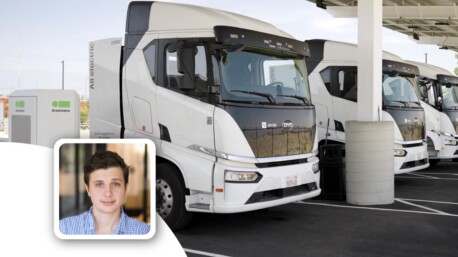
Interoperability testing focuses on the interaction between our chargers and the wide variety of electric vehicles on the market. This type of testing ensures that a charging session can begin, ramp, and complete smoothly, no matter what combination of hardware and vehicle is involved.
These tests gather critical information about the way each model of vehicle interacts with our charging hardware at a deep level to help prepare Greenlane to receive these vehicles and ensure they operate as expected on day one, while also helping inform fleet operators how they can best deploy their vehicles to our charging facility.
As new EV models are released, and as existing ones evolve through their own software updates, it’s critical to verify that our chargers can communicate with them effectively and respond as expected. We run each test repeatedly across different scenarios, capturing as much data as possible, ensuring that our results are accurate, replicable, and actionable if any issues are found.
This process also gives us the opportunity to work as a bridge between charger and vehicle OEMs, building relationships that did not exist before and fostering a clear and effective feedback loop between these stakeholders. As our vehicle and charger OEM partners release new models, new firmware versions for their equipment, and upgrade legacy models, we rerun the interoperability test program to keep certifications for commercial EVs current, ensuring drivers and fleet managers can continue to rely on our chargers to meet their charging needs.
We don’t just test chargers in ideal conditions, we test them the way real drivers will use them: unpredictably, repeatedly, and even incorrectly.
Our goal is to simulate every type of behavior a driver might throw at a charger, from tapping the wrong RFID card to swiping a gift card instead of a credit card. We try things in different sequences, under different conditions, and from every angle we can imagine. Real-world charging isn’t always neat and orderly, and our test processes reflect that.
For example, we’ll simulate a network outage mid-session to see if the charger handles it gracefully and if all the session data transfers to our server once connectivity is restored. We’ll reboot chargers in the middle of a session, cut off power, inject faults, and run the same command 20 times in a row to see if anything breaks. We put ourselves into the shoes of drivers and try to imagine all the ways a session can go wrong and deliver feedback to our hardware partners to provide operational resiliency in those scenarios.
We take pride in thinking ahead for the driver. We surface bugs before they have a chance to impact the end user and our customers. Whether it’s testing how a charger behaves when CTEP-compliant meter data is required for incentives or ensuring receipts are generated in a timely manner, our mindset is simple: expect the unexpected. Because if we can replicate it in testing, we can prevent it in the field.
We bring charger manufacturers and vehicle OEMs to the same table to ensure everything works together seamlessly, because strong collaboration between these two sides of the EV ecosystem is essential for a reliable charging experience. Our team makes that possible through decades of combined experience across CPOs, OEMs, integrators, and developers. That industry knowledge helps us identify challenges early and deliver practical solutions before they reach the driver.
Our close relationships with hardware manufacturers are also critical for fostering a robust testing environment. They often provide us with direct and indirect testing support, often deploying personnel to the field, having remote personnel monitoring live, or providing their own test facilities for Greenlane’s use so that we can test at a moment’s notice if needed.
This support provides us with immediate feedback on problems we come across, allowing our team to quickly begin working toward resolutions and enabling the rapid deployment of field technicians when needed to resolve critical issues. We always maintain open communication when issues arise. If a bug is discovered, we work directly and persistently with our partners to understand the root cause and deploy a fix as fast as possible.
Our collaboration work with vehicle manufacturers and OEMs continues to grow. We’re actively building relationships across the market to ensure we’re testing every type of vehicle possible.
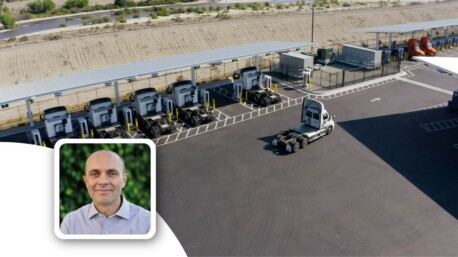
Our Colton site, which is open to the public and accessible 24/7, gives us a unique opportunity to conduct these tests in a real-world environment. This hands-on access helps us refine the charging experience and improve interoperability between every charger and every vehicle that arrives.
We’re committed to helping businesses thrive in a low-carbon economy. Let’s partner in a cleaner future without compromise.